Tanning & Your Skin
Tanning Causes Skin Cancer & Premature Aging
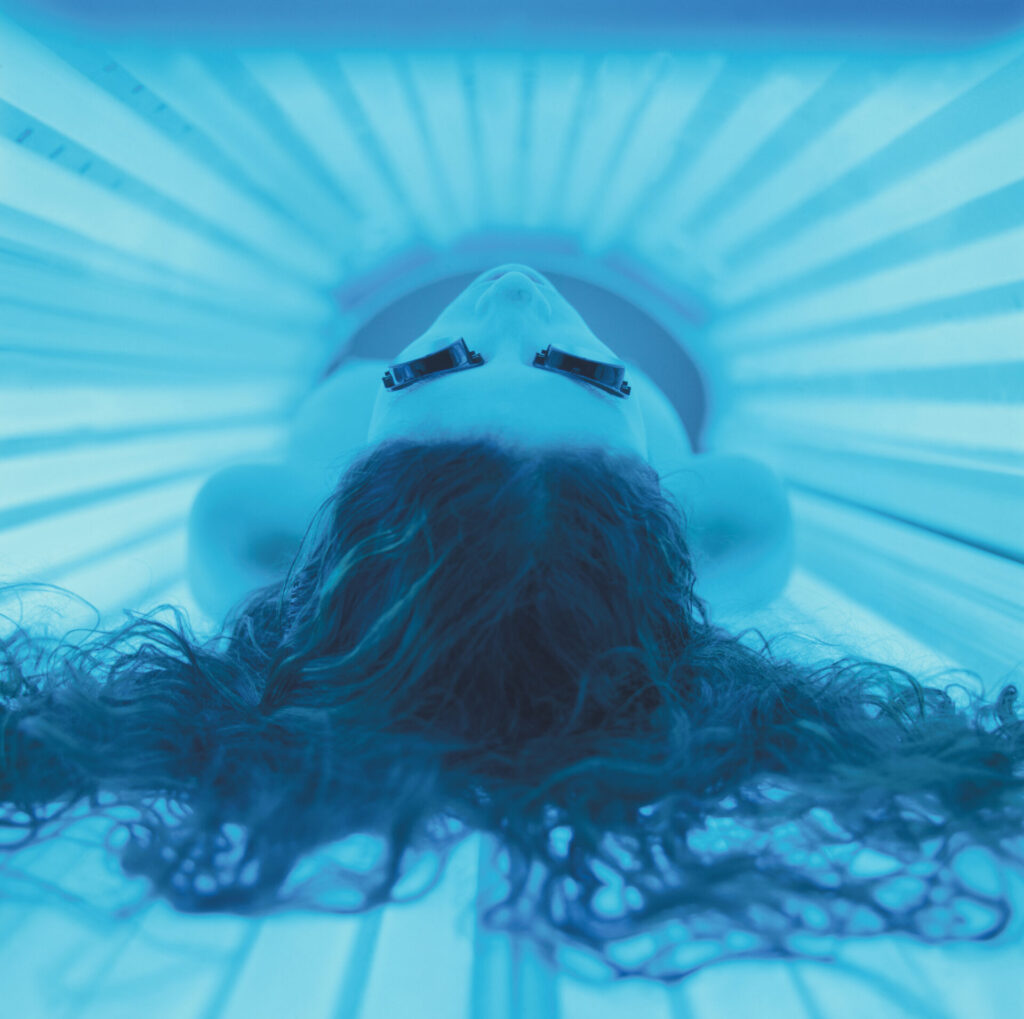
Indoor Tanning Dangers
75%
increased risk of developing life-threatening melanoma if you start using indoor tanning beds before age 35.

Is tanning bad for you? Tanning, whether outside or indoors, can have dangerous consequences.
- What is tanning? In short, tanning is a sign of skin damage.
- Is tanning healthy? NO! While often associated with good health, the “glow” of a tan is the very opposite of healthy; it is evidence of DNA injury to your skin.
- What are the risks of tanning? Tanning damages your skin cells and speeds up visible signs of aging. Worst of all, tanning can lead to skin cancer. Tanning is proven to increase your risk of basal cell carcinoma, squamous cell carcinoma and melanoma.
It’s a fact: There is no such thing as a safe or healthy tan. Your best defense is to avoid tanning altogether.
What causes tanning?
There is no such thing as a safe or healthy tan. Tanning is caused by exposure to ultraviolet (UV) radiation from the sun or tanning beds that causes genetic damage to cells on your outmost layer of skin. The skin tries to prevent further injury by producing melanin (the pigment that gives our skin its color) that results in darkening – what we call a tan.
This damage is cumulative, starting from the very first tan.
What is at stake?
Your Health
- One in five Americans will develop skin cancer by the age of 70.
- Worldwide, there are more skin cancer cases due to indoor tanning than there are lung cancer cases due to smoking.
Your Appearance
- Tanning changes and ages your skin.
- It’s a visible signal of damage that accelerates the appearance of wrinkles, dark spots and weathered skin.
- If you do develop skin cancer, you run the risk of further, sometimes unsightly changes to your appearance.
Nonmelanoma skin cancer


Melanoma skin cancer

MOST nonmelanoma skin cancers (NMSC) and a large percentage of melanomas are associated with exposure to UV rays from natural sunlight and/or indoor tanning.

Tanning facts and risks
Skin damage starts with your very first tan. Each time you tan, the damage builds up, creating more genetic mutations and greater risk.
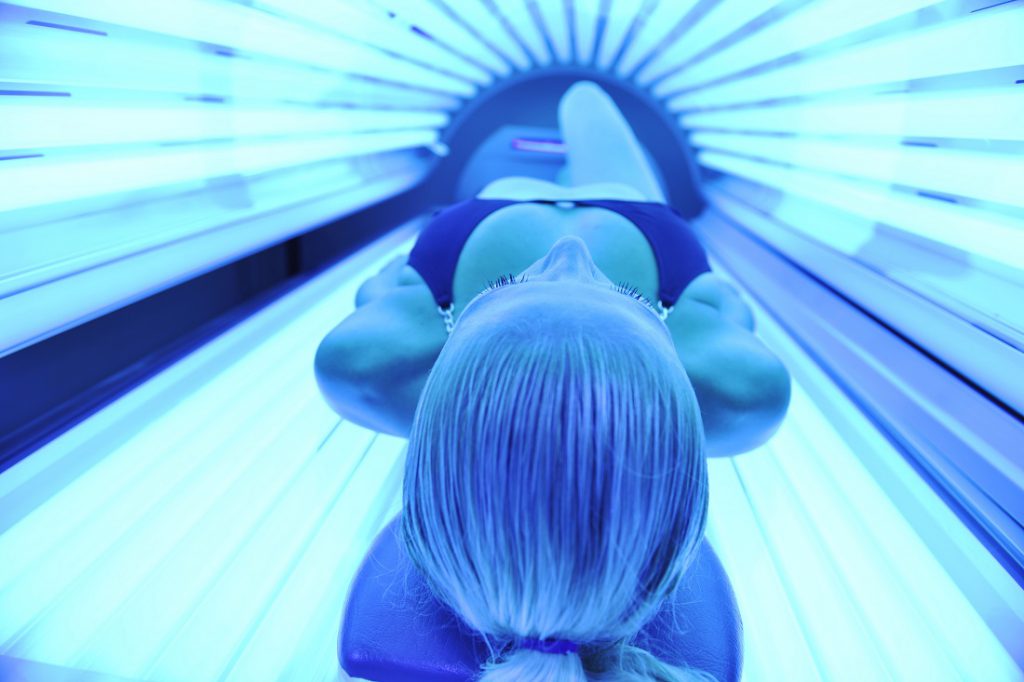
Indoor tanning is dangerous: Tanning beds don’t offer a safe alternative to sunlight; they raise the risk for skin cancers. One study observing 63 women diagnosed with melanoma before age 30 found that 61 of them – that’s 97 percent — used tanning beds.
Tanning damages all types of skin: Even if your skin type is not fair, tanning causes DNA injury that can lead to premature aging and skin cancer.
You can easily reduce your likelihood of developing skin cancer by practicing sun safety.
Tanning FAQs
YES. Tanning, whether indoors or outdoors, is dangerous. In fact, UVA rays used in tanning beds might increase your risk of developing melanoma.
NO! Tanning does not protect against sunburn; it simply exposes you to more harmful UV rays. The best way to prevent sunburn is to seek the shade, wear protective clothing, a wide-brimmed hat and UV blocking sunglasses, and apply sunscreen every day.
NO. Tanning does not help treat SAD, and UV light from tanning beds is proven to cause you harm.
Protect yourself & look great
- Avoid tanning entirely: It’s the best way to safeguard against unhealthy, unsightly skin damage.
- Fake, don’t bake: If you want a golden glow, consider sunless tanning products. There are many options that can give you a bronzed look, but you still need sun protection!
- Tone, don’t tan: Get radiant skin by doing aerobic or high-intensity exercises. Working out feels good and boosts your mood.
- Hydrate, eat great: Drink lots of water and choose whole, unprocessed foods. Your skin will thank you!
Make healthy skin a way of life. Get the details here: Your Daily Sun Protection Guide
Reviewed by:
Anna Chien, MD
Heidi Jacobe, MD