

Photo Credit: Getty Images/leezsnow
Got sunscreen questions? Elisabeth G. Richard, MD, Assistant Professor of Dermatology at Johns Hopkins University School of Medicine is here to provide you with evidence-based answers about storing and traveling with sunscreen to help you prevent sun damage that can lead to skin cancer. Dr. Richard is a member of our Photobiology Committee, which sets the standards for our Seal of Recommendation program.
Q. What does a sunscreen’s expiration date mean? Is it important?
Dr. Elisabeth G. Richard: A sunscreen’s expiration date indicates how long the product will remain stable and effective when stored and maintained properly. After that point, the active ingredients may break down and provide less protection than what is listed on the packaging. If you cannot find an expiration date on your sunscreen’s packaging, you should mark the month and year you purchased it. It should be good for about three years after that date. Once your sunscreen is expired, it is best to throw it away so that you do not risk ultraviolet (UV) damage while using expired sunscreen, increasing your risk of developing skin cancer.
Q. Do I need to wear sunscreen on an airplane?
Dr. Richard: You might not expect it, but flying on an airplane can expose your skin to UV radiation, as UVA rays can pass through airplane windows. UV radiation exposure increases 4 to 5 percent with every 1,000 feet above sea level. For daytime flights, especially when seated in a window seat, apply a broad-spectrum sunscreen with SPF 30+ before boarding and reapply it every two hours for longer flights. Closing the window shade when possible provides an added layer of protection.
Q. Is it safe to transfer sunscreen from a standard bottle to carry-on size packaging when traveling?
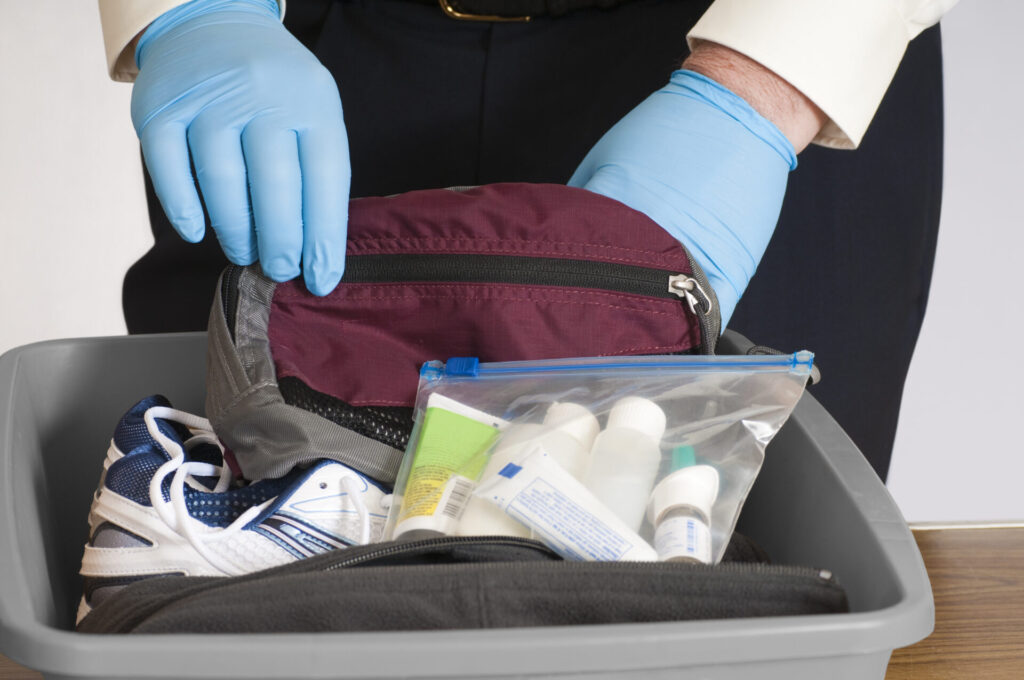
Dr. Richard: Removing sunscreen from its intended packaging is not recommended. The original packaging is designed to protect the sunscreen’s formulation and maintain product stability. Transferring your sunscreen to an untested or non-airtight bottle can lead to breakdown of the active ingredients, making your sunscreen less effective. The Skin Cancer Foundation Photobiology Committee recommends purchasing travel-size sunscreens or buying full-size sunscreen bottles once you have made it to your destination, instead.
Q. How should I store my sunscreen? Is it safe to leave it in my car or on the beach?
Dr. Richard: Sunscreen is formulated to remain stable under specific conditions. Excessive heat, whether on the beach, in your car, or in other high-temperature environments, can break down the product’s active ingredients, reducing its effectiveness. Sunscreen should be stored in a cool, dry place when not in use. When at the beach, consider storing it in a cooler or in a temperature-controlled bag. When traveling by car, consider putting sunscreen in your bag instead of leaving it in the car for on-the-go protection.