
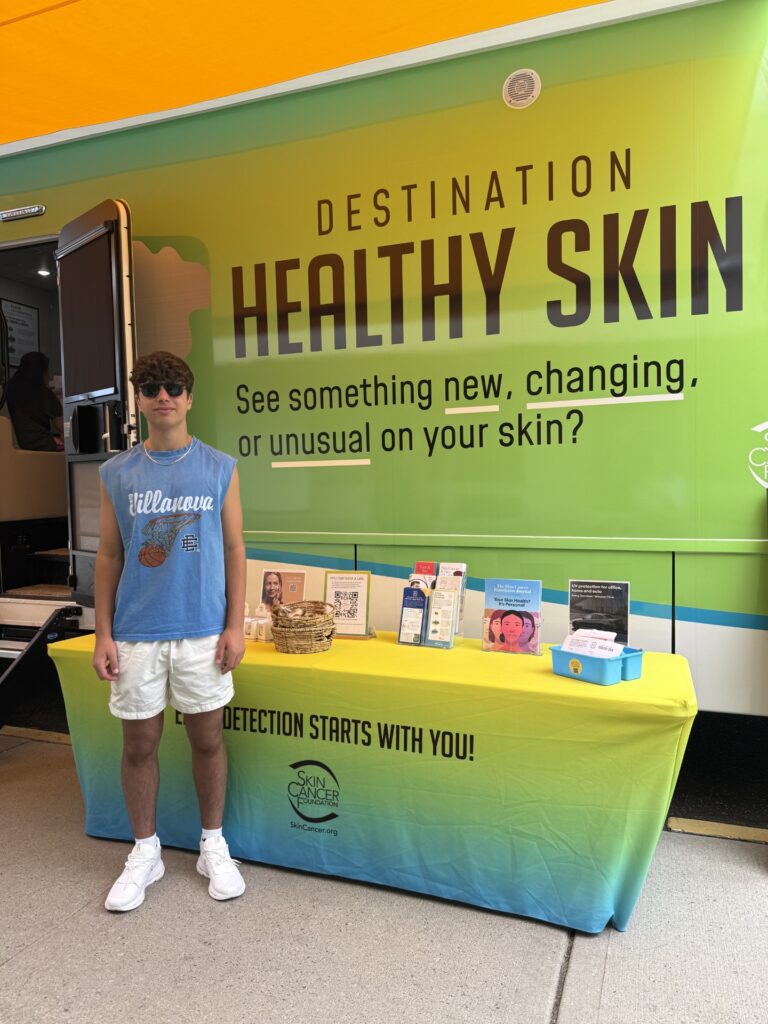
Jake Schweitzer at a fundraiser he created for The Skin Cancer Foundation
Jake Schweitzer wants people to know: Skin cancer is serious and can happen to anyone. It happened to his grandfather, who lost a battle with melanoma before Jake ever had a chance to meet him. That deep and personal loss is one reason why Jake is working with The Skin Cancer Foundation to raise awareness about skin cancer prevention.
By Jake Schweitzer
Skin cancer isn’t something that just affects older people or those who are not athletic. In fact, many people in professional sports, including NFL coach, Sean McDermott, Hall of Fame quarterback, Terry Bradshaw and Detroit Lions’ defensive end, Josh Paschal, have publicly shared their experiences with skin cancer, often discovering suspicious spots after years of training and competition.
These are elite performers with access to top medical care — and skin cancer still happened to them.

Photo courtesy of Jake Schweitzer
That’s a strong reminder that being fit doesn’t make you immune to diseases like skin cancer. As a matter of fact, athletes who train outdoors may be even more vulnerable because of prolonged, unprotected sun exposure. The good news is that with proper sun protection, skin cancer is highly preventable.
Why Starting Young Matters
One of the most important things I’ve learned is that sun damage is cumulative, and about 23 percent of lifetime exposure occurs by the age of 18. This means that the sunburns resulting from skipped sunscreen in your high school and college years matter just as much as what happens later in life.
Melanoma can show up years after the damage is done. By the time you realize sunscreen matters, the harm may already be there. That’s why education and proactive prevention now are so important — especially for kids and athletes who feel invincible.
Simple Ways Athletes Can Protect Themselves
Sun protection doesn’t have to be complicated or annoying. A few small habits can make a huge difference:
- Apply a broad-spectrum SPF 30+ sunscreen before practice or games. Use SPF 50+ for extended time outdoors.
- Reapply if you’re outside for long periods, or after swimming or sweating.
- Keep sunscreen in your drink cooler to remind you to reapply.
- Use spray or sport sunscreens designed to absorb quickly.
- Wear hats and UV-blocking sunglasses when possible.
- Get familiar with your skin and check it regularly. Look for anything new, changing or unusual.
- See a dermatologist at least once a year for a professional skin exam.
These steps take minutes — but they can literally save your life.
Skin Cancer Is Personal
Because of melanoma, I never got a chance to meet my grandfather. That loss is something that my family lives with every day, and something that could have been prevented with more awareness.
If sharing this makes even one athlete stop and put on sunscreen before practice, it’s worth it.
You don’t have to be at the beach for the sun to be dangerous.
You just have to be outside.
And as athletes — we always are.