

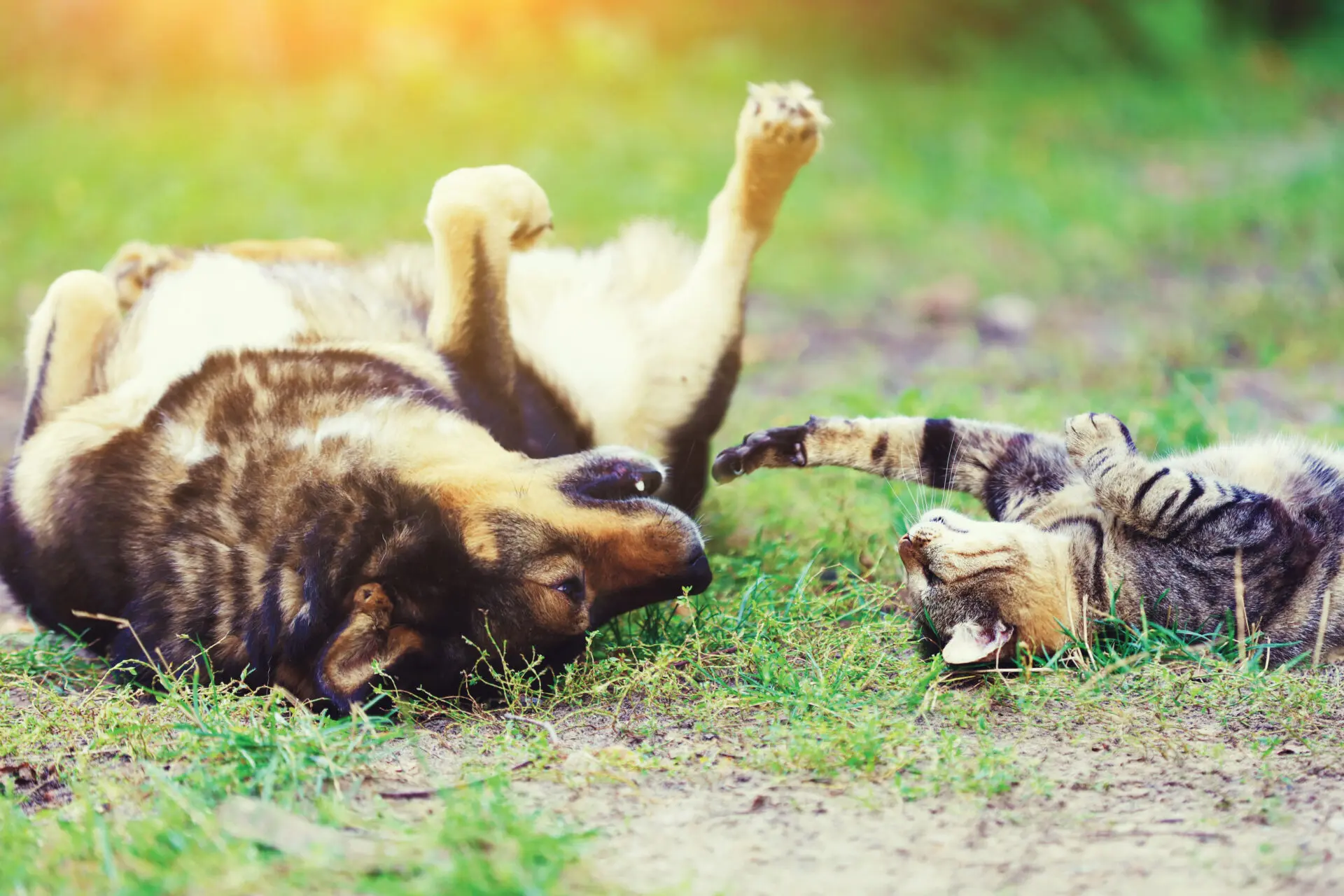
Belly Flops: Dogs and cats love to lie in the sun and expose the skin that is most vulnerable. That includes areas where the hair is light-colored and not as dense, like bellies and ears. Yes, your pets can get sunburned! Vvvita / Getty Images
Q: My cat and dog love to be outside. Can pets get skin cancer?
Jill L. Abraham, VMS, DACVD: Yes, pets can get skin cancer! Most pet owners probably don’t know that or give it much thought. Most people have heard that they should go to their dermatologist and get checked if they see something suspicious or unusual on their own skin. The same thinking should apply to your pets.
Animals may develop skin changes as bumps or patches, often in areas where there is hair. We see lots of benign lumps, bumps and growths that develop. But sometimes we see malignancies. It’s important for pet owners to monitor their furry friends’ skin health. Here’s some guidance.
Know the Risks
Dogs and cats can get sunburned. Their hair or fur may help to block some of the sun’s dangerous ultraviolet (UV) rays, but it’s not 100 percent foolproof, especially if you have pets with light-colored fur. Some pit bulls, bulldogs and other breeds have very short and light-colored hair. They also like to lie on their back in the sun and sunbathe. Cats with lighter-colored hair are also more prone to sun damage, and they love to lie in the sun, too!
Another risk for dogs is short summer haircuts for hot weather. This happens with some cats too; they may get shaved down or get the “lion cut.” Suddenly there is a lot less hair. A colleague in Arizona has clients whose cats and dogs get summer haircuts. One took their dog right from the groomer outside on a hike for a few hours and the poor animal’s whole back got sunburned. This can be painful and can increase their risk for precancers and skin cancers. I don’t see that as much in New York City, but my colleagues in areas like Arizona, Southern California or Florida often do. Geography plays an important role.
Pets with lighter coats are at higher risk, too, especially if they have any skin conditions that cause hair loss. I treat a lot of pets with different skin diseases, allergies or other problems that lead to hair loss. Some pets I treat have been clipped around a surgical area and are waiting for the hair to grow back. These areas of hair loss are then more prone to sunburn or sun damage.
Common Types of Skin Cancer in Pets
The most common skin cancer we see in cats is squamous cell carcinoma (SCC). In cats, there are two ways we can see SCCs develop. One is exposure to UV light. If they like to bask in the sun, they may be more prone to developing SCCs on their nose (especially pink noses; black noses have more melanin and offer a bit more protection), ear tips, eyelids or other areas of the skin, especially on areas that have less fur. The other form of SCC we see in cats is related to the papillomavirus and is not related to UV light.
In dogs, the most common skin cancer is a mast cell tumor. Mast cell tumors are sometimes related to breed and other times associated with skin allergies and overreactive immune systems. Many of those tend to be benign and can be treated with surgical excision, but there are a small percentage that are more aggressive and malignant, requiring additional treatment. Cats can also get mast cell lesions, but they are often benign.
We also see SCC, melanoma, gland and hair follicle tumors and basal cell carcinoma (BCC) in dogs, but they’re not as common as in their human counterparts. And unlike humans, dog melanomas that develop on their skin are often benign. The scary melanomas on dogs are ones that develop in the oral cavity, claw beds or the base of the nails. Those tend to be more aggressive.
What to Keep an Eye on
Look for anything new, like a red spot or open sore on your pet that isn’t healing within a week or two. Notice if something appears suddenly or is changing, getting reddish/purplish, ulcerated, or open and raw. Also watch for hair loss. I remind owners not to rely on “Doctor Google” but to go to their veterinarian to have them check it out.
Do a careful massage of your pets every couple of months to make sure you don’t feel any new lumps or bumps. Bathing your dogs at home is a great opportunity when their hair is wet to get a good look at all the areas of the skin. Just like you would do a check of yourself, doing the same for your pets could be lifesaving.
If you do see or feel a new spot, there are pet body maps you can find online, or you can draw an outline of a dog or cat and mark where you find suspicious spots. You might also note the date, the size and what it looks like. Then take it with you when you visit your vet. That’s how we track in the vet clinic, and you can do this too!
A Range of Treatments
In veterinary medicine, primary care veterinarians and veterinary dermatologists usually make the diagnosis, but treating skin cancer can be a team effort. There are certain skin cancers that primary care veterinarians and veterinary dermatologists treat and others that will be referred to our oncologists or surgeons.
How we treat a skin cancer in pets depends on the type of cancer and the location. Some veterinary dermatologists use CO2 laser ablation to treat skin cancers that are superficially confined within the layers of the skin and not invading deeper, as with SCC in situ (aka Bowen’s disease). It is especially useful when there are multiple large patches on an animal, and you can’t surgically remove all of them with a scalpel. The laser ablates the skin layer by layer to remove the skin cancer. Pets heal well from the CO2 laser and don’t need stitches. Some surgeons will also do this procedure.
For other SCCs, surgical excision may be required, although sometimes cryotherapy or laser ablation is an option. Some pets may need chemotherapy or radiation therapy, such as dogs with mast cell tumors. Mast cell tumors can also be treated surgically. For malignant melanoma, there is a nonspecific treatment vaccine for dogs. Cryotherapy, laser surgery or topical chemotherapy treatments are used for precancerous spots.
As a specialist, about half of the SCC cases I see have multiple lesions present or will recur after treatment. If it was a UV-induced SCC, then we can have the pet owner make changes to limit the pet’s sun exposure after treatment to help prevent recurrence. But with the SCCs related to the papillomavirus in dogs or cats, we can’t clear the virus with medication or vaccines as we can with humans. We sometimes can treat these areas with CO2 laser or a topical chemotherapy like imiquimod.
Clinical Trials for Pets
If you have exhausted the treatment options available for your pet, there are clinical trials for dogs and cats. If a clinical trial is available for your pet’s diagnosis, you might consider enrolling. It may provide a lot of benefit for that pet but can also help medical science and the chance to save other lives in the future.
Prevention and Protection
- Shade: The best protection for pets is to provide shade for them year-round and get them out of the sun. Dogs don’t sweat the way we do, so it’s harder for them to exchange heat, especially in humid weather. Don’t forget lots of water for outdoor pets to keep them hydrated. Never leave a pet in a car unattended.
- Clothing: There are rash guards and other sun-protective clothing and hats made for pets. Some are sized to fit cats, if you can get them to tolerate it. (Some cats like to wear clothing.) Hairless cats, like the Sphynx breed, are especially vulnerable. UV-protective T-shirts that are made for people can be an option for some dogs. There is even sun-protective eyewear for pets.
- Sunscreen: We advise sunscreen for pets who are going to be outside a lot. There are pet sunscreens available, or we recommend a water-based children’s sunscreen. One trick when putting sunscreen on your dog is to distract them by hand feeding them bits of food so they’ll be more likely to eat the food from your hand rather than to lick the sunscreen. This will give the applied sunscreen a chance to dry. Make sure the sunscreen does not contain zinc oxide, as it can be toxic to pets if ingested. If you are putting sunscreen on your cat, be aware that some sunscreens made for dogs are not safe for cats.
- Window treatment: Remember that windows allow dangerous UV rays to penetrate, both at home and in your car. If you have a pet who loves to lie by a certain window or is frequently in the car for long drives, consider getting UV-protective shades or window film. Window UV protection is also beneficial for us, the pet owners. In fact, everything you do to protect your pets, you should also do for yourself and your family. — Interview by Mia Medney
ABOUT THE EXPERT

Jill L. Abraham, VMD, DACVD, completed her residency in veterinary dermatology at the University of Pennsylvania and was board certified by the American College of Veterinary Dermatology in 2007. She currently practices at BluePearl Pet Hospital, providing dermatology services for dogs and cats at both Manhattan and Brooklyn locations.