Skin Cancer Information
What You Need to Know About Cancers of the Skin
What Is Skin Cancer?
- Skin cancer is the out-of-control growth of abnormal cells in the epidermis, the outermost skin layer, caused by unrepaired DNA damage that triggers mutations.
- These mutations lead the skin cells to multiply rapidly and form malignant tumors.
- The main types of skin cancer are basal cell carcinoma (BCC), squamous cell carcinoma (SCC), melanoma and Merkel cell carcinoma (MCC).
Read on to find out what can cause skin cancer.
What Does Skin Cancer Look Like?
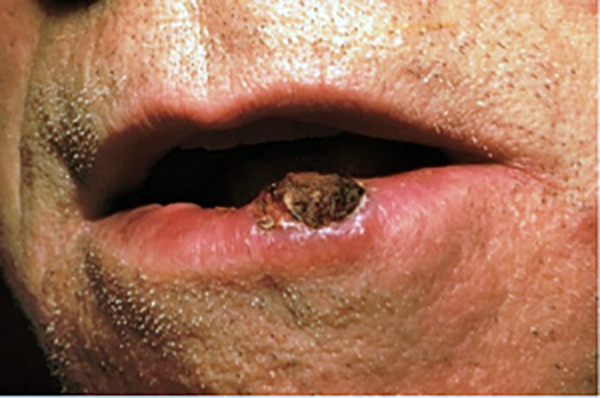
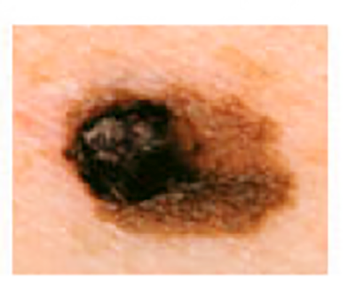
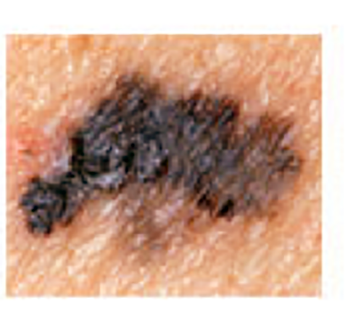
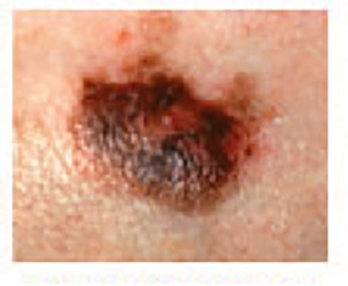
Skin cancers can look quite different from one person to another due to skin tone, size and type of skin cancer and location on the body. See our Skin Cancer Pictures page for a selection of photos to help you understand what skin cancers can look like. View pictures.
Skin cancer is easy to brush off because it so often looks like everyday stuff, but it behaves differently than expected over time. Anything new, changing, or stubbornly refusing to heal is worth a closer look.
A few of the harmless-looking things skin cancer can imitate:
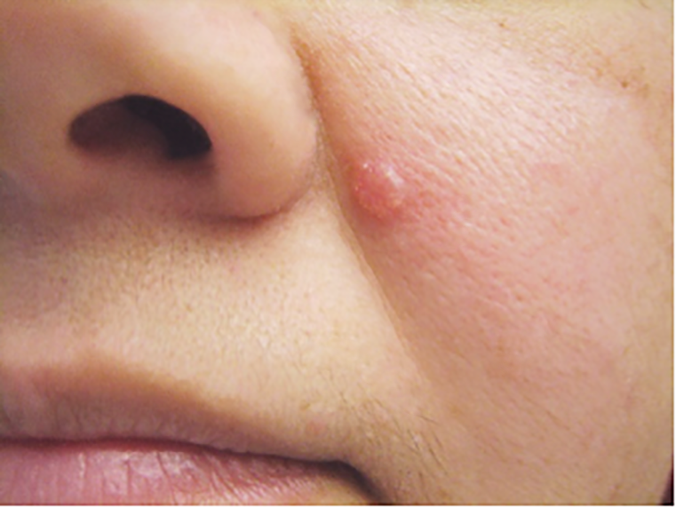
- A pimple that won’t quit. Basal cell carcinoma can show up as what seems like a pimple, except it never really comes to a head and never clears. It might bleed a little, scab over, and then come right back in the same spot. If a “pimple” has been hanging around for weeks and looks a bit pearly or shiny, that’s your cue.
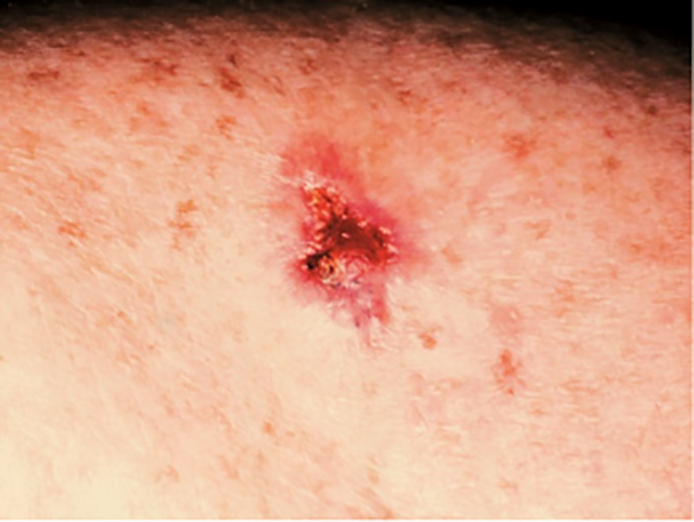
- A scab that keeps reopening. One of the more common signs of basal and squamous cell carcinoma is a sore that scabs over, looks like it’s healing, then breaks open and bleeds again — cycling like that for weeks without ever fully closing up.
- A bruise that overstays. A normal bruise fades within a week or two. A melanoma can look bruise-like but just won’t go away, and it’s especially worth attention when it shows up somewhere you didn’t bump — under a nail, or on a palm or the sole of a foot.
- A wart that’s new or changing. Squamous cell carcinoma can look like a rough, raised, wart-ish growth. A wart you’ve had forever is one thing; one that appears out of nowhere in adulthood, keeps growing, or starts to bleed is worth having checked.
What Causes Cancers of the Skin?
The two main causes of skin cancer are the sun’s harmful ultraviolet (UV) rays and using UV tanning beds. Smoking and other things can also increase risk of death from some types of skin cancer. Daily sunscreen is one of the simplest, best-supported ways to protect against UV damage — despite occasional myths to the contrary.
The good news is that if skin cancer is caught early, your dermatologist can treat it with little or no scarring and high odds of eliminating it entirely. Often, the doctor may even detect the growth at a precancerous stage, before it has become a full-blown skin cancer or penetrated below the surface of the skin.
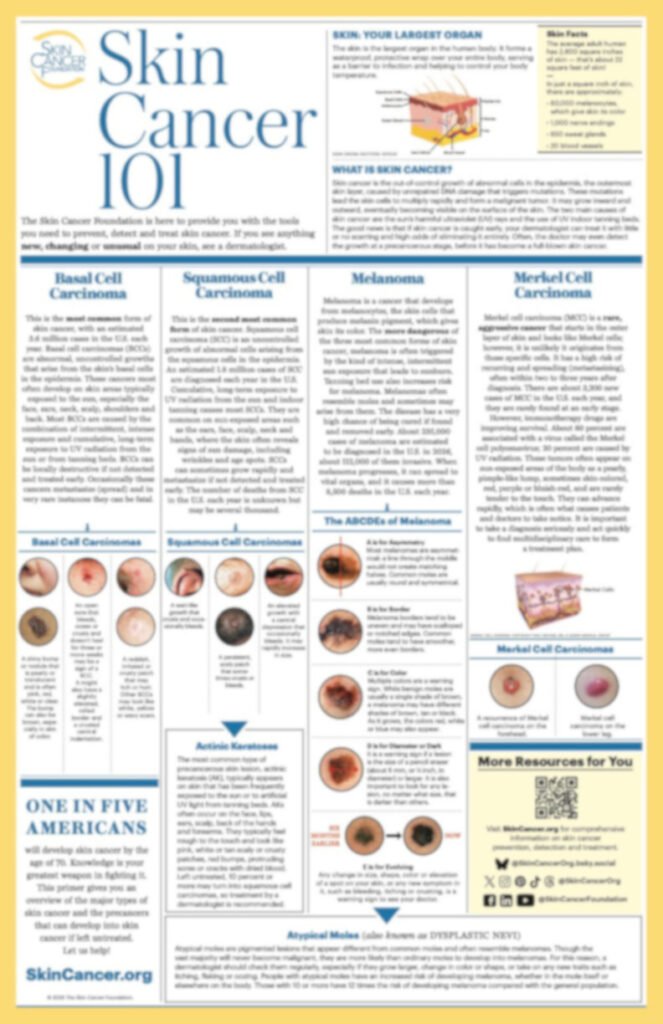

Skin Cancer Information PDF
The Skin Cancer Foundation is here to provide you with the tools you need to prevent, detect and treat skin cancer. Download our Skin Cancer Information PDF.
The Risk
1 OUT
OF 5
Americans will develop skin cancer by age 70.

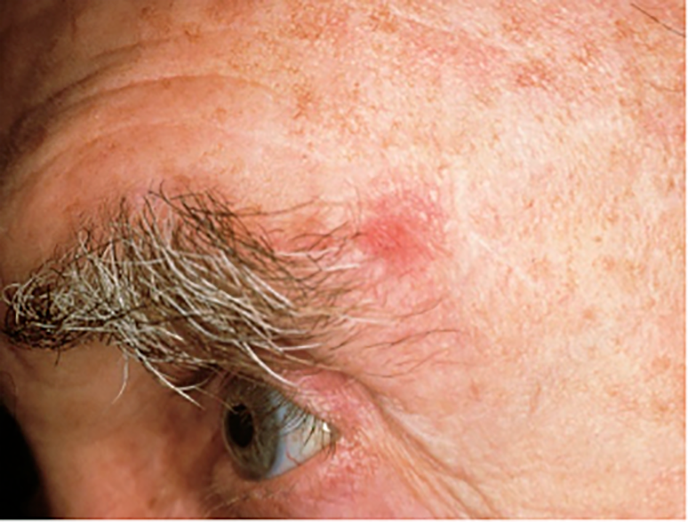
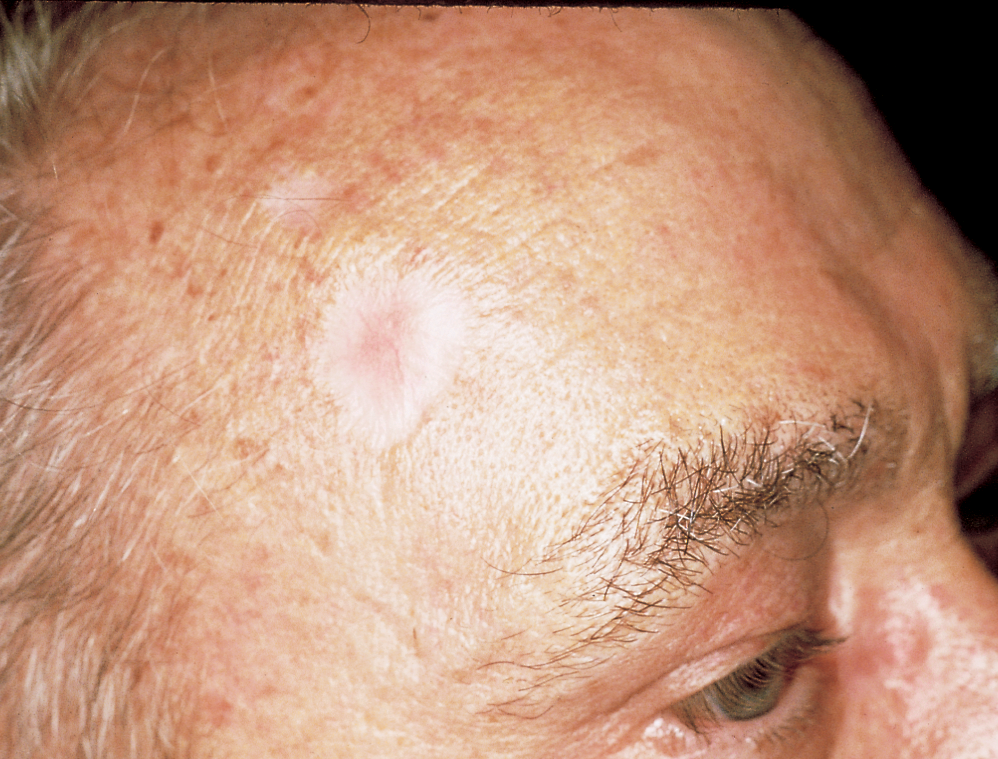
Basal cell carcinoma
What is it? Basal cell carcinomas (BCCs) are abnormal, uncontrolled growths that arise from the skin’s basal cells in the outermost layer of skin (epidermis).
Where is it usually found? These cancers most often develop on skin areas typically exposed to the sun, especially the face, ears, neck, scalp, shoulders and back.
What causes it? Most BCCs are caused by the combination of intermittent, intense exposure and cumulative, long-term exposure to UV radiation from the sun.
How many people get it? BCC is the most common form of skin cancer, with approximately 3.6 million cases diagnosed in the United States each year.
How serious is it? BCCs can be locally destructive if not detected and treated early. Occasionally these cancers metastasize (spread); and in very rare instances they can be fatal.
Squamous cell carcinoma
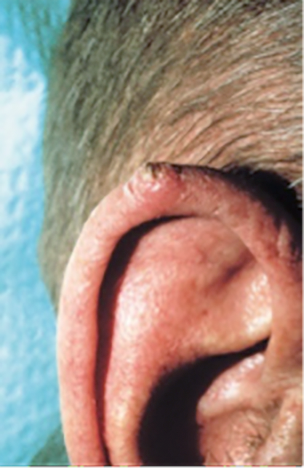
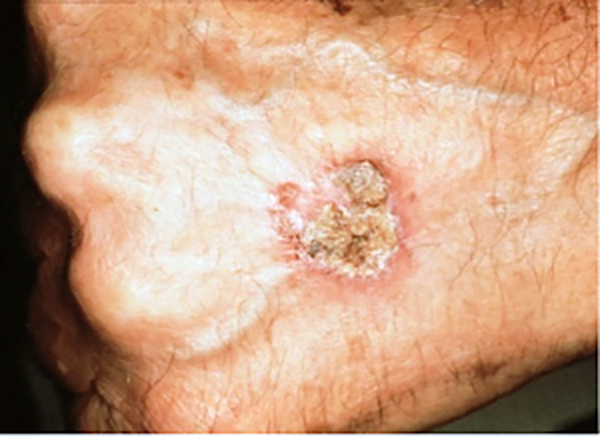
What is it? Squamous cell carcinoma (SCC) is an uncontrolled growth of abnormal cells arising from the squamous cells in the outmost layer of skin (epidermis).
Where is it usually found? SCCs are common on sun-exposed areas such as the ears, face, scalp, neck and hands. These are places where the skin often reveals signs of sun damage, including wrinkles and age spots.
What causes it? Cumulative, long-term exposure to UV radiation from the sun and tanning beds causes most SCCs.
How many people get it? SCC is the second most common form of skin cancer. An estimated 1.8 million cases are diagnosed each year in the U.S.
How serious is it? SCCs can sometimes grow rapidly and metastasize if not detected and treated early.
Melanoma
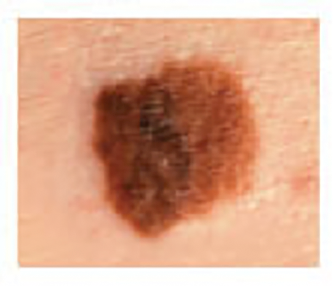
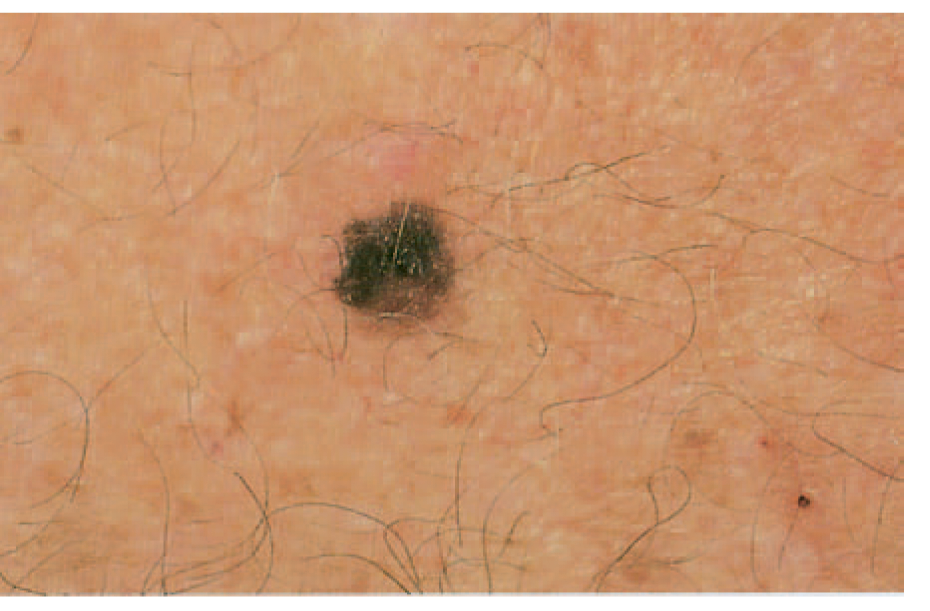
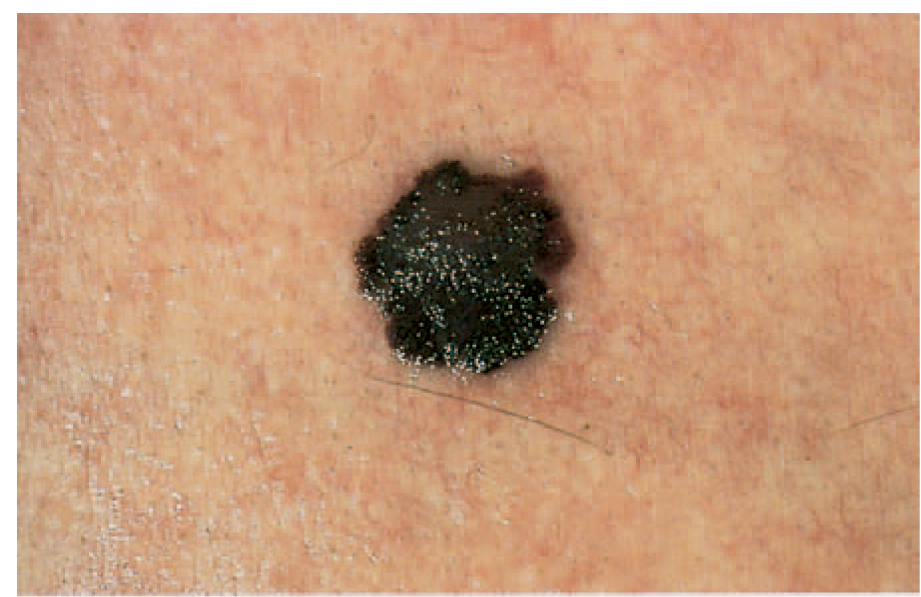
What is it? Melanoma is a cancer that develops from melanocytes, the skin cells that produce melanin pigment, which gives skin its color.
Where is it usually found? Melanomas often resemble moles and sometimes may arise from them. They can appear on any area of the body, even in areas that are not typically exposed to the sun.
What causes it? Melanoma is often triggered by the kind of intense, intermittent sun exposure that leads to sunburn. Tanning bed use also increases risk for melanoma.
How many people get it? In 2025, an estimated 212,200 new cases of melanoma are expected to occur in the U.S. Of those, 107,240 cases will be in situ (noninvasive), confined to the epidermis (the top layer of skin), and 104,960 cases will be invasive, penetrating the epidermis into the skin’s second layer (the dermis).
How serious is it? Melanoma is the most dangerous of the three most common forms of skin cancer. Melanomas can be curable when caught and treated early. In 2025, melanoma is projected to cause about 8,430 deaths.
Merkel cell carcinoma
What is it? Merkel cell carcinoma (MCC) is a rare, aggressive skin cancer.
Where is it usually found? These tumors usually appear as firm, painless lesions or nodules on a sun-exposed area (about half of the time on the head and neck, and frequently on the eyelids).
What causes it? Usually associated with a virus called the Merkel cell polyomavirus, MCCs most often arise on sun-exposed areas in fair-skinned individuals over age 50.
How many people get it? About 3,000 new cases of MCC and about 700 deaths from it occur in the U.S. each year, and that is expected to rise.
How serious is it? MCCs are at high risk of recurring and metastasizing throughout the body, so early detection and treatment are crucial.
Understanding Skin Cancer
What is skin cancer? What does it look like, what causes it and how is it treated? Get the answers to these questions and more in this educational overview of the world’s most common cancer.