Skin Cancer Prevention
Protect Yourself With a Complete Approach
Skin cancer prevention requires a comprehensive approach to protecting yourself against harmful ultraviolet (UV) radiation.
That’s because UV radiation from the sun isn’t just dangerous, it’s also sneaky. Not only can it cause premature aging and skin cancer, it reaches you even when you’re trying to avoid it – penetrating clouds and glass, and bouncing off of snow, water and sand. What’s more, sun damage accumulates over the years, from prolonged outdoor exposure to simple activities like walking the dog, going from your car to the store and bringing in the mail.
The Skin Cancer Foundation recommends that you:
- Seek the shade, especially between 10 AM and 4 PM.
- Don’t get sunburned.
- Avoid tanning, and never use UV tanning beds.
- Cover up with clothing, including a broad-brimmed hat and UV-blocking sunglasses.
- Use a broad-spectrum (UVA/UVB) sunscreen with an SPF of 30 or higher every day. For extended outdoor activity, use a water-resistant, broad-spectrum (UVA/UVB) sunscreen with an SPF of 50 or higher.
- Apply 1 ounce (2 tablespoons) of sunscreen to your entire body 30 minutes before going outside. Reapply every two hours or after swimming or excessive sweating. Find sunscreen by searching our Recommended Products.
- Keep newborns out of the sun. Use sunscreen on babies over the age of six months.
- Examine your skin head-to-toe every month.
- See a dermatologist at least once a year for a professional skin exam.
- Get all the details: Your Daily Sun Protection Guide. Skin Cancer Prevention PDF.
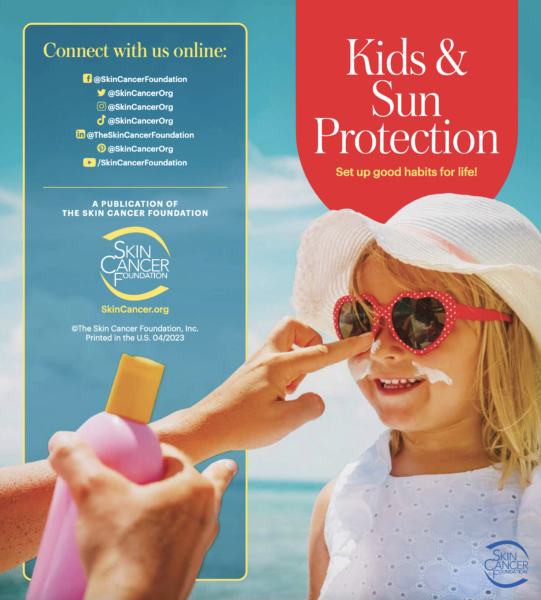
Intended only for personal use. Do not copy or distribute. To purchase the brochure, visit store.SkinCancer.org.
Download the Kids & Sun Protection PDF: