

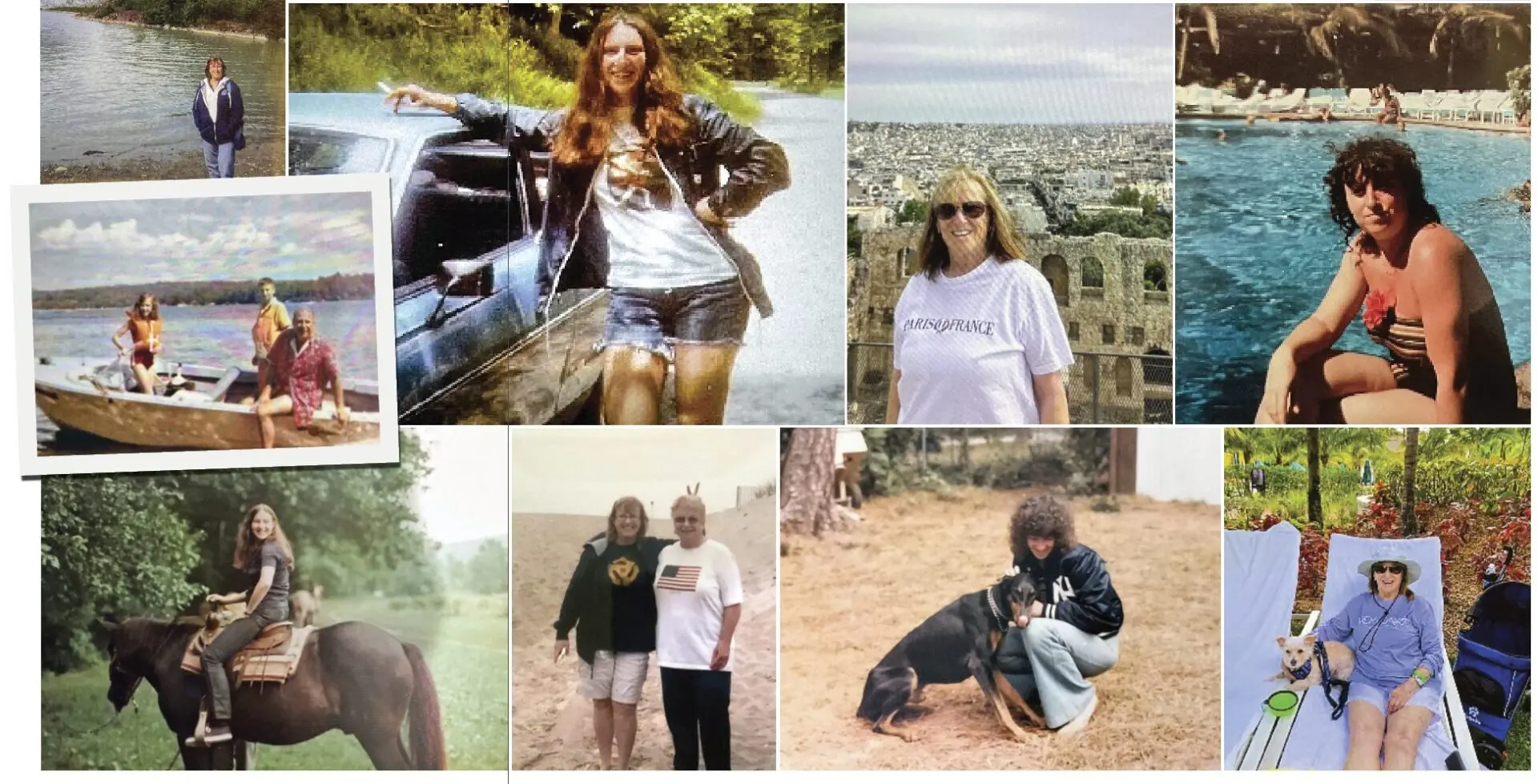
Looking back at her lifetime of fun in the sun, Ilene feels a mixture of nostalgia, gratitude for all she was able to do — and, yes, regret. Once, being tan was the goal; later, erasing the consequences of that tan became the focus. Now the trend is protection rather than correction! Photos above courtesy of Ilene Potter
Ilene Potter loved her active outdoor life. Decades later, she thought the worst consequence of all that sun exposure was the visible aging on her face. She was wrong. Trying to fix that problem uncovered a far more dangerous concern.
By Chloe Ganjian, with Deborah S. Sarnoff, MD
While sorting through old photos for this article, Ilene Potter realized just how much she had changed over the decades. From what seemed like 27 different hairstyles (black and white snapshots of braids and “what’s going on with those bangs?” to the permed “Streisand in A Star is Born” ’fro), a rapidly evolving closet (tube tops, Daisy Dukes?) and never-ending discoveries of new sports activities (moto, swimming, riding, boating, with no sun protection!), Ilene looked back with a smile. However, she also realized how much sun exposure she had racked up. Through all the trends of each decade, one thing remained constant: she was often in the sun, and it was always cool to be tan.
As a Kid…
Ilene Potter grew up in a world that rarely slowed down — and she almost never stayed indoors. Born in Brooklyn in the early 1950s, she moved with her family to Forest Park Cooperative in Woodhaven, Queens, when she was just 2 years old. The nine-building complex was packed with families and children, and it quickly became the backdrop for a childhood defined by constant movement, close friendships and time spent outside. With both parents working and a sister nine years older helping to guide her along, Ilene was an adventurous and social youngster.
Her days were filled with games of stickball, punchball, paddleball and softball, beach trips with friends, afternoons at the movies and weekends that rarely involved staying indoors. Sports were central to family life, especially with a father who loved athletics and brought Ilene along to baseball games, football games and endless outdoor activities. As Ilene puts it, she was like the son he never had. She happily embraced the role of a tomboy, spending hours under open skies, whether playing, watching or tagging along on family outings.
As she grew older, the adventures expanded. Summers brought two-week trips to Laconia, New Hampshire, where days were spent boating, tubing and water-skiing. Winters and summers alike were marked by weekends in the Catskills with her Richmond Hill Temple community skiing, tobogganing, snowmobiling and soaking in every season the outdoors had to offer. Camping trips upstate added canoeing and swimming to the mix. Sunscreen, hats or shade were rarely part of the picture. After all, being tan wasn’t just normal, it was desirable.
Looking back, Ilene’s childhood reads like a scrapbook of movement, freedom and sunshine. One where laughter, friendship and fresh air shaped her early years long before anyone thought to question what all that sun might leave behind.
The Price to Pay
For Ilene, years spent chasing sunshine, sports and adventure eventually left their mark: etched into fine lines, deeper wrinkles and a leathery texture that told the story of a life lived largely outdoors. The ultraviolet (UV) radiation of the sun exposure that she once celebrated as a way to get a sun-kissed glow had instead damaged her skin cells, leading to loss of collagen and elastin and also causing DNA mutations that can cause skin cancer. That became something to try to erase, giving way to cosmetic procedures, makeup regimens and skin-care routines she hoped might undo some of the visible damage of a childhood spent outdoors.
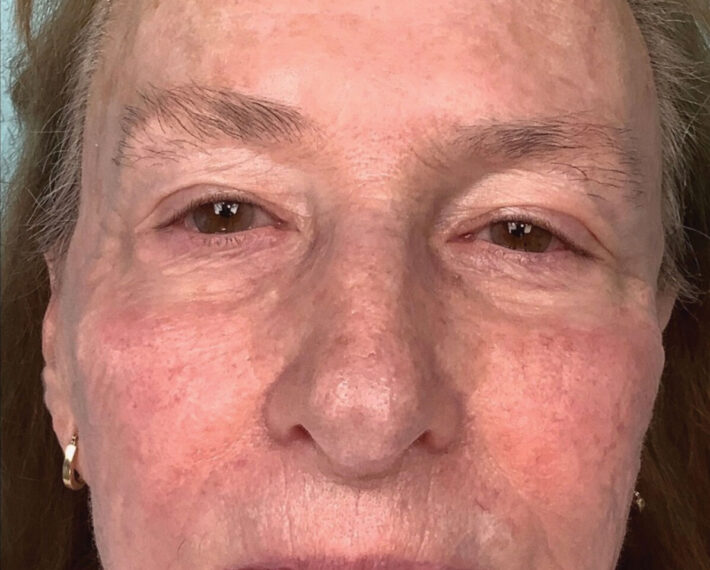
As an older adult, Ilene was not happy with her face, finding herself increasingly aware of the wrinkles she saw in the mirror, lines that crept across her face and down into her neck. After seeing how beautifully a close friend of hers healed as a result of a cosmetic procedure aimed at softening these wrinkles, Ilene felt hopeful and excited about the possibility of doing the same. That curiosity led her to dermatologist Deborah S. Sarnoff, MD, founder of Cosmetique Dermatology, Laser & Plastic Surgery LLP, in Greenvale, New York (and co-author of this article). Dr. Sarnoff met with Ilene through a video call and within minutes described her as the perfect candidate for her Acelift® cosmetic procedure. Done in one session, it’s a combination of Botox, filler and CO2 laser that in selected patients is a viable, safe and effective alternative to a surgical facelift.
Although Ilene was living in Florida at the time, it was obvious to her that Dr. Sarnoff would be the one to provide her with what she thought would be the perfect fix. Without hesitation, Ilene booked her appointment. What she didn’t yet realize was that the lines she was hoping to erase could end up rewriting the story of her life.
The Big Day
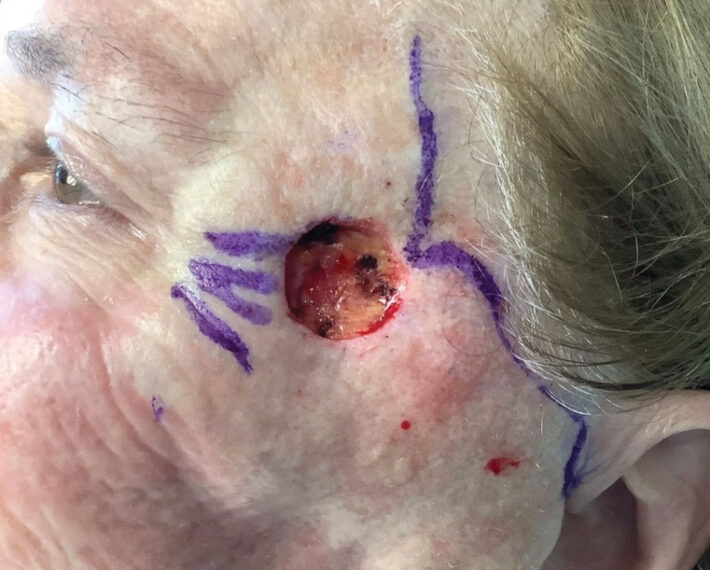
On June 25th, 2025, Ilene arrived at Cosmetique, filled with excitement. As Dr. Sarnoff began prepping and analyzing Ilene’s face, she noticed a small pink bump on her left temple. To a person not trained in dermatology, it wouldn’t look like much — maybe a little blemish or irritation. In fact, Ilene herself had never noticed the spot, likely because it was hiding just under the arm of her eyeglasses. However, dermatologists have trained eyes, and this one trusted her gut. “Let’s just biopsy it to be safe,” Dr. Sarnoff said. At that moment, Dr. Sarnoff did not think the bump would be anything serious, but her years of dermatologic experience and training have taught her to never ignore signs on the skin.
With the biopsy collected, Dr. Sarnoff proceeded with Ilene’s transformation. The procedure went smoothly, and Ilene left with aftercare instructions and a glowing sense of anticipation. Even with some swelling from the lasers and needles, Ilene beamed, already sensing her new skin taking shape.
A few days later, though, Ilene’s biopsy report arrived. It wasn’t nothing. It wasn’t even an easily treatable basal cell carcinoma (BCC). It was malignant melanoma.
The Devil in Disguise: Amelanotic Melanoma
This wasn’t just any melanoma, but what is known as an amelanotic (or colorless) one. Amelanotic melanomas lack melanin, the dark pigment that gives most moles and melanomas their color. These rare unpigmented melanomas may be pinkish-looking, reddish, purple, normal skin color or essentially clear and colorless.
Ilene’s melanoma didn’t look like the textbook pictures. While the ABCDEs — Asymmetry, Border, Color, Diameter (or Dark) and Evolving — are lifesaving tools, some melanomas slip under the radar. Amelanotic melanomas, for instance, hide in plain sight, pink and innocent-looking, as the one near Ilene’s left eye attests. “It’s the amelanotic melanomas that scare us most,” Dr. Sarnoff explains. “They don’t play by the rules.
How Vanity Saved Ilene’s Life
“When something doesn’t follow the rules, you pay attention,” Dr. Sarnoff explains. She emphasizes that cosmetic care should always be performed by a physician trained to recognize disease, not just beauty. “If this had been a medical spa, they very well might have lasered right over that spot,” she notes. “The only visible clue to a melanoma would have been destroyed. All the while, the melanoma could have continued to advance because it wasn’t completely removed. It could grow deeper into the skin, spread to another part of the body, become life-threatening and even kill her.”
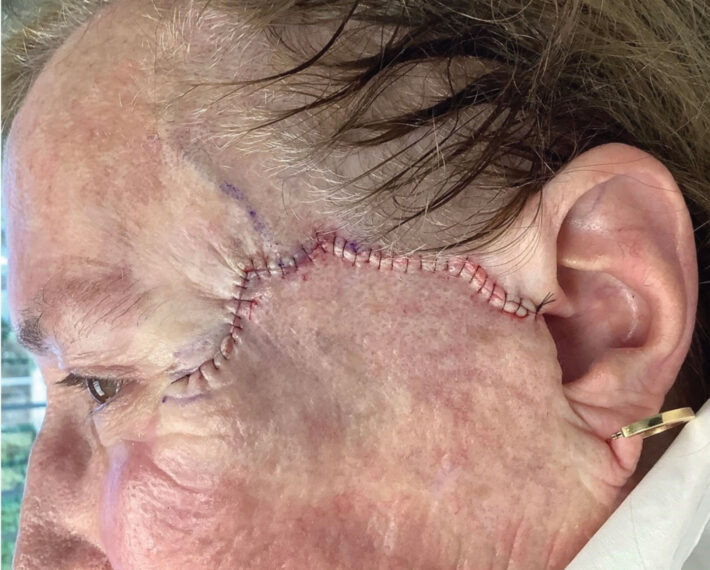
Ilene was extremely lucky that her cosmetic appointment led her to a doctor who instinctively knew to first do a biopsy of that small lesion before proceeding. Thanks to Dr. Sarnoff’s eagle-eyed, no-stone-unturned style of practice, Ilene’s melanoma was diagnosed in the early stages. Dr. Sarnoff performed the excision, and plastic surgeon Robert H. Gotkin, MD, did the closure and repair immediately afterward.
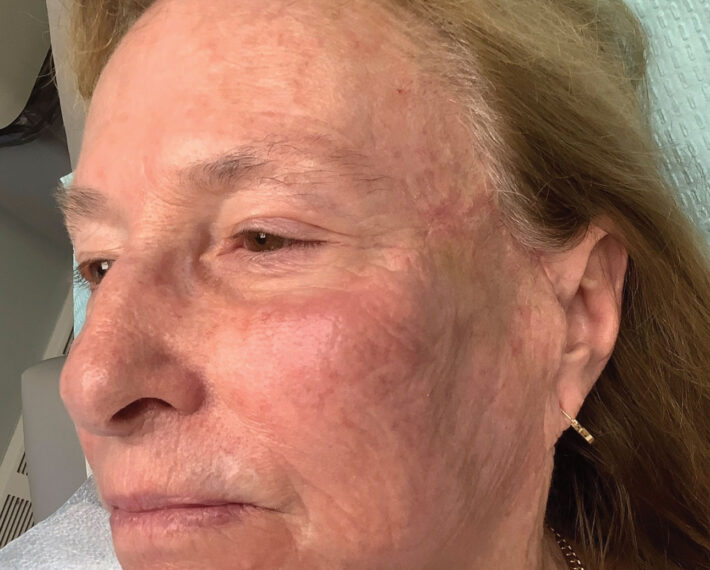
Ironically, vanity may have brought Ilene into the office, but it ultimately saved her life. The culprit was the decades of UV sun exposure that caused the loss of collagen, the deep wrinkles and also the DNA damage in the skin cells. Sometimes, in the pursuit of beauty, you stumble upon something even more important: health.
Now, when Ilene steps outside, her habits include sun-protective clothing, a wide-brimmed hat, sunglasses, daily sunscreen — and regular visits to a dermatologist. So, the next time you smooth, zap or fill, remember: your skin tells stories. And every now and then, those lines on your face that you wished to erase might just write you a very lucky happy ending.
Chloe Ganjian is a pre-med student at Cornell University. She spent her summer of 2025 assisting as a clinical intern at the Long Island office of Cosmetique Dermatology, Laser & Plastic Surgery LLP, where she worked closely with the care team to support patient visits. She plans to carry the insights she gained there as she continues her medical training and future clinical work.
Deborah S. Sarnoff, MD, is a clinical professor in the Ronald O. Perelman Department of Dermatology at NYU Grossman School of Medicine. She is also codirector of Cosmetique Dermatology, Laser & Plastic Surgery LLP in New York City and Long Island, and president of The Skin Cancer Foundation.
 1. Ilene’s main focus before her Acelift® procedure was to smooth out her wrinkles.
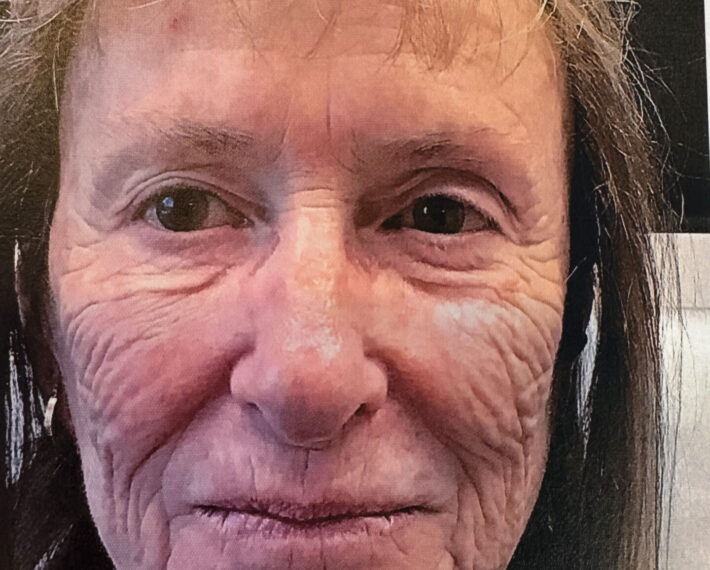
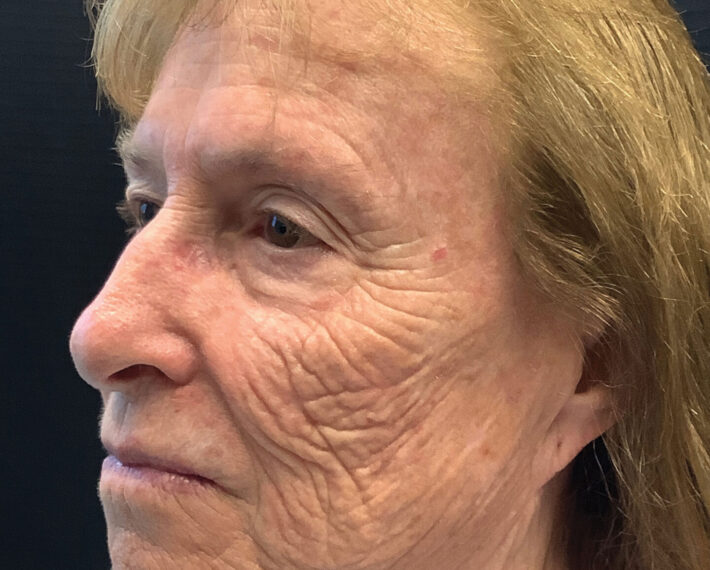
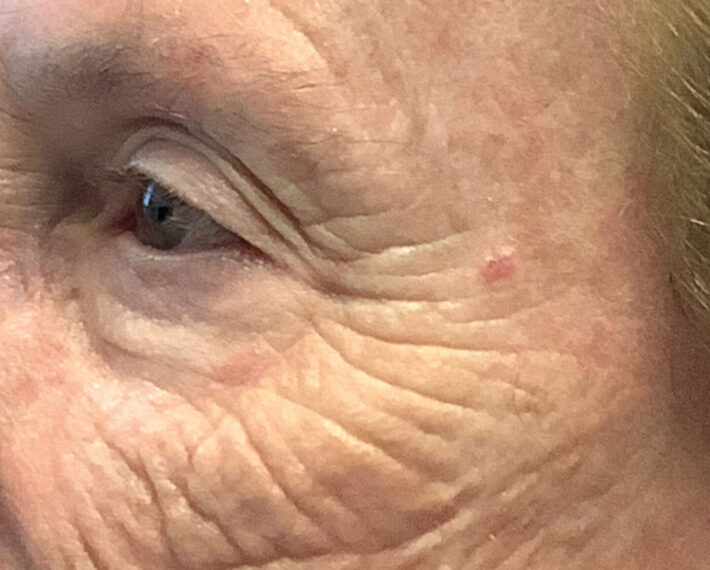
Medical photos 1-7 courtesy of Deborah S. Sarnoff, MD