
Translation: 


Melanoma Warning Signs
What You Need to Know About Early Signs of Skin Cancer
Finding melanoma at an early stage is crucial; early detection can vastly increase your chances for cure.
- The ABCDEs and the Ugly Duckling sign can help you detect melanoma.
- Look for anything new, changing or unusual on both sun-exposed and sun-protected areas of the body.
- In women, melanomas commonly appear on the legs.
- In men, the trunk is the number one place melanomas develop.
- Keep in mind that melanomas can arise anywhere on the skin, even in areas where the sun doesn’t shine.
Most moles, brown spots and growths on the skin are harmless – but not always. Read on for more information.
Early detection makes a difference
99%
5-year survival rate for patients in the U.S. whose melanoma is detected early. The survival rate drops to 74% if the disease reaches the lymph nodes and
35% if it spreads to distant organs.

The ABCDEs of melanoma
The first five letters of the alphabet are a guide to help you recognize the warning signs of melanoma.
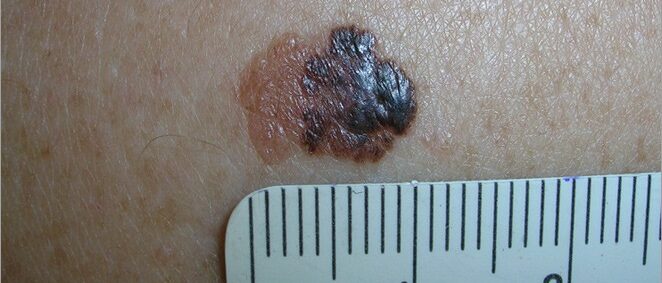
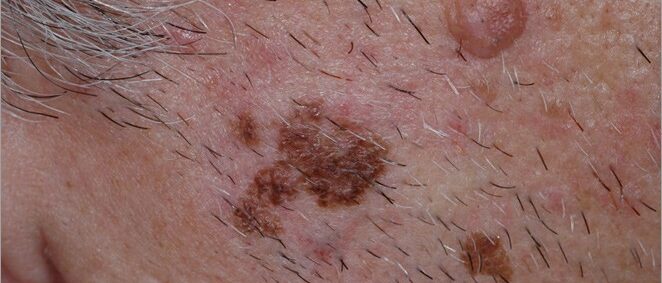
A is for Asymmetry. Most melanomas are asymmetrical. If you draw a line through the middle of the lesion, the two halves don’t match, so it looks different from a round to oval and symmetrical common mole.
B is for Border. Melanoma borders tend to be uneven and may have scalloped or notched edges. Common moles tend to have smoother, more even borders.
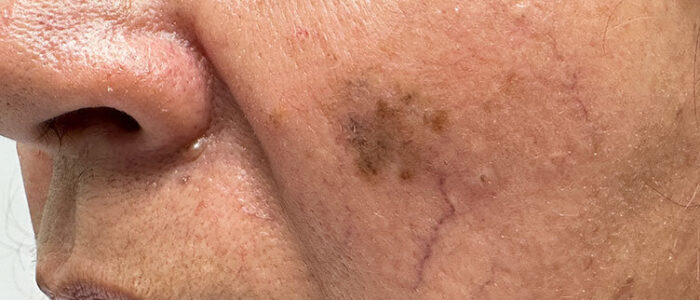
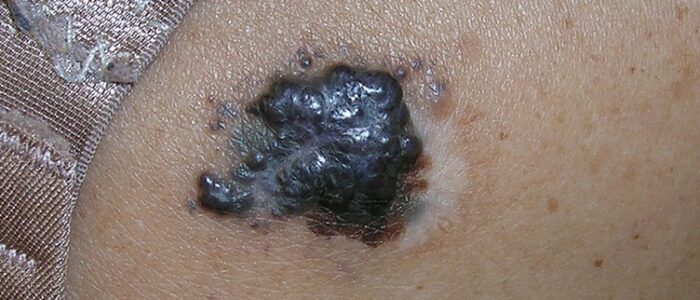
C is for Color. Multiple colors are a warning sign. While benign moles are usually a single shade of brown, a melanoma may have different shades of brown, tan or black. As it grows, the colors red, white or blue may also appear.
D is for Diameter or Dark. While it’s ideal to detect a melanoma when it is small, it’s a warning sign if a lesion is the size of a pencil eraser (about 6 mm, or ¼ inch in diameter) or larger. Some experts say it is important to look for any lesion, no matter what size, that is darker than others. Rare, amelanotic melanomas are colorless.
E is for Evolving. Any change in size, shape, color or elevation of a spot on your skin, or any new symptom in it, such as bleeding, itching or crusting, may be a warning sign of melanoma.
If you notice these warning signs and symptoms, or see anything NEW, CHANGING or UNUSUAL on your skin see a dermatologist promptly.
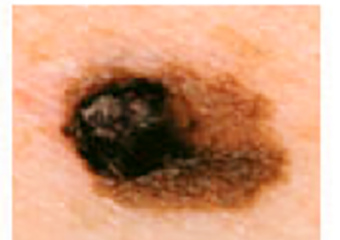 A is for Asymmetry
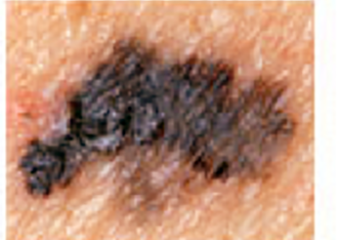 B is for Border
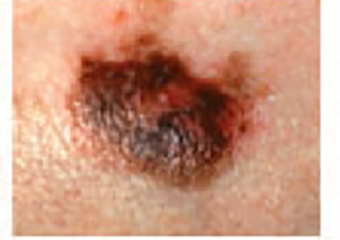 C is for Color
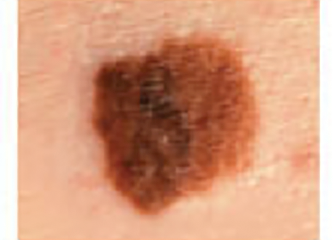 D is for Diameter or Dark
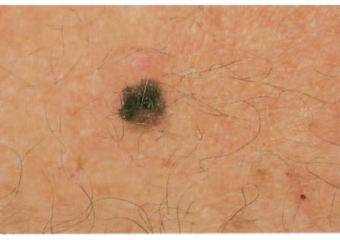 E is for Evolving (Before)
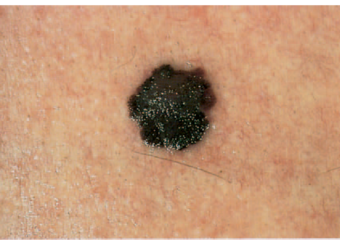 E is for Evolving (After)
Please note: Since not all melanomas have the same appearance, these photos serve as a general reference for what melanoma can look like. If you see anything NEW, CHANGING or UNUSUAL on your skin, go get checked by a dermatologist.
Look out for an ugly duckling
The Ugly Duckling is another warning sign of melanoma. This recognition strategy is based on the concept that most normal moles on your body resemble one another, while melanomas stand out like ugly ducklings in comparison. This highlights the importance of not just checking for irregularities, but also comparing any suspicious spot to surrounding moles to determine whether it looks different from its neighbors. These ugly duckling lesions can be larger, smaller, lighter or darker, compared to surrounding moles. Also, isolated lesions without surrounding moles for comparison are considered ugly ducklings.

Melanoma can be tricky
Identifying a potential skin cancer is not easy, and not all melanomas follow the rules. Melanomas come in many forms and may display none of the typical warning signs.
It’s also important to note that about 20 to 30 percent of melanomas develop in existing moles, while 70 to 80 percent arise on seemingly normal skin.
Amelanotic melanomas are missing the dark pigment melanin that gives most moles their color. Amelanotic melanomas may be pinkish, reddish, white, the color of your skin or even clear and colorless, making them difficult to recognize.
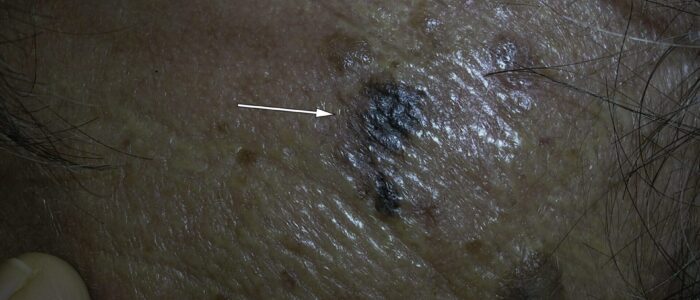
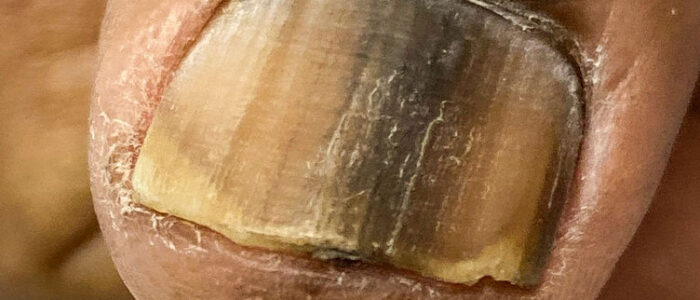
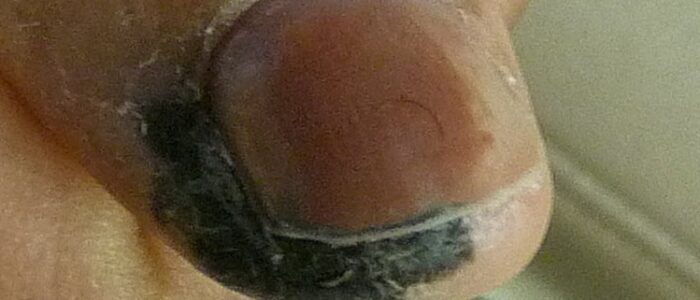
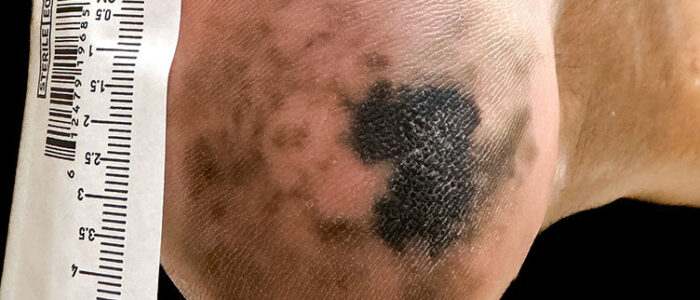
Acral lentiginous melanoma (ALM), the most common form of melanoma found in people of color, often appears in hard-to-spot places, including under the fingernails or toenails, on the palms of the hands or soles of the feet. View images.
The takeaway: Be watchful for any new mole or freckle that arises on your skin, a sore or spot that does not heal, any existing mole that starts changing (growing, swelling, itching) or any spot, mole or lesion that looks unusual.
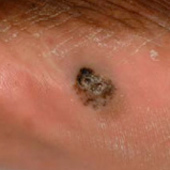
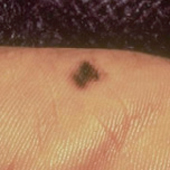
Acral lentiginous melanoma (ALM) is the most common melanoma found in people of color.
What you can do
Check yourself: No matter your risk, examine your skin head-to-toe once a month to identify potential skin cancers early. Take note of existing moles or lesions that grow or change. Learn how to check your skin here.
When in doubt, check it out. Because melanoma can be so dangerous once it advances, follow your instincts. Visit your doctor if you see a spot that just doesn’t seem right.
Keep in mind that while important, monthly self-exams are not enough. See your dermatologist at least once a year for a professional skin exam.
If you’ve had a melanoma, follow up regularly with your doctor once treatment is complete. Stick to the schedule your doctor recommends. This ensures that you identify any recurrence as early as possible.
More melanoma images
 Large melanoma with varied colors
Photo credit: Richard P. Usatine, MD.




Reviewed by:
Allan C. Halpern, MD
Ashfaq A. Marghoob, MD
Ofer Reiter, MD
This section made possible through an education grant from